Talk to us Risks to Watch

Why is it critical to provide just-in-time privilege access in privileged access environments?

An Overview

There is a saying “Too much of anything is bad.” It is believed that too much of anything unnecessary builds up a sense of profuseness which leads to misuse.

It is applicable to IT security as well. Any end-user in an IT environment with unlimited access to critical systems round the clock might turn out to be counter-productive if compromised. With the increase in IT workloads, especially in privileged access environments, organizations tend to manage it in three ways commonly:

  • Increase the number of tasks for the existing users
  • Increase the number of end-users for any specific workload
  • Allow additional privileged rights to the existing users on an ad-hoc basis

While going for the last one, it has been noticed that organizations tend to miss the retraction of elevated privilege after the completion of the task. It results in many unnecessary standing privileges, which pose a huge security threat since the system or application remains exposed to unattended access rights. Malicious insiders, suspicious third-party users, and hackers normally search for similar access control vulnerabilities because it becomes easy to compromise data assets.

Moreover, in different circumstances, IT administrators allow (or add additional) privileged access to the end-users (or privileged users) while shifting (or adding) roles. As a result, “Too Much Access” rights expose the end-user to a risk of unauthorized access. 

What are the Risks of “Unlimited Access”?

Organizations have the tendency to ignore the question – what could be the repercussions of the overall access control ecosystem if we go ahead with unlimited access? In the age of digitalization, the proliferation of digital identities is extremely evident. It is a herculean task for the IT risk assessment teams to monitor and manage every user activity, every day, in every application seamlessly. As a result, chances of unauthorized access, data breach, and cyber espionage remains high.

“Unlimited Access” means organizations might lose track of who is accessing what, when, and for which reason. Moreover, once the tasks are over, the privileged rights are not revoked on time which invites risks of unnecessary access. As an obvious result, any anomalous activity remains undetected and unnoticed. Even if the Privileged Access Management (PAM) tools are in place, the fundamental principles sometimes could take a backseat. For instance, non-compliance with the ‘Least Privilege’ principle due to the absence of the Just-in-time (JIT) privilege elevation approach pushes organizations toward multiple risk factors.

How do standing privileges or over-privilege affect security?

The “Verizon Data Breach Investigation Report, 2022” has revealed that almost 74% of data breach incidents involve unauthorized access to privileged accounts. It is so widely spread today, that typical organizations form groups or device-level permissions to allow and execute privileged commands. As a result, even if any user is not directly given access to any system or application, that user’s domain or group-level permission settings often allow them access whenever they require it. It bears higher risks, and it is possible only when there are standing privileges.

However, every time it is not that the privileged rights are not revoked after the completion of the designated task; there are other factors as well. For example, employees who leave their teams or the organization are not always removed on time – group members change, and other accounts are added as privileged accounts, but the privileged account of the ex-employee remains as an unnecessary 24x7x365 access for the malicious actor who uses it as an entry point for a data breach. To be precise, these over-privileged accounts amplify insider threats.

To address this, the just-in-time privilege elevation approach helps enterprises to manage and control unauthorized access risks. Let us see what ARCON | PAM offers.

The benefits of ARCON’s Just-In-Time Privilege Tool

Just-in-time Privilege is a highly essential practice in today’s digital workplace. With the number of privileged accounts rising exponentially due to increasing cloud computing, virtualization, and DevOps practice, the risk surface has expanded. This happens because managing and controlling privileged activities in large distributed environments is always a challenge for IT security admins. Malicious actors exploit the vulnerabilities arising from unmonitored standing privileges and eventually result in financial and reputation damage. Over-privilege entitlements increase data breach risks. 

ARCON’s Just-In-Time (JIT) Privilege tool removes the risks from the “Always-on” privilege practice by offering –

  • Removal of too many standing privileges that do not follow the “need-to-know” and “need-to-do” access policies
  • Denial of Privileged Access once the defined privilege task is completed because the JIT tool revokes privileged rights immediately after the task is over 
  • To build the foundation for the Zero Trust framework because there are no chances of misusing “trust” with the JIT approach – as privileges are granted only on-demand, hence “trust” is never assumed 
  • Implementation of the Least Privilege principle and thereby following regulatory compliance

Moreover, in the case of non-privileged accounts, JIT Privilege of ARCON | PAM helps with time-bound access in the following ways:

  1. Privileged Elevation and Delegation Management (PEDM)
  2. Use of ephemeral accounts
  3. Use of ephemeral tokens

Conclusion

The security risk in privileged access control space multiplies when an enterprise creates always-on privileges. It opens new alleys for malicious actors to get unauthorized access to sensitive information. The Just-In-Time (JIT) privilege tool helps organizations to build the foundation of the Least Privilege principle without which role-based access policy can be jeopardized.
Seamlessly Scale the Privileged Access Management Environment with ARCON | PAM SaaS

Overview

The Privileged Access Management (PAM) space is growing at a brisk pace. There is a rising demand for PAM solutions to address many critical enterprises’ use cases that include cloud access governance, DevOps use cases, shared accounts, and non-human identities interacting with RPAs. 

In one of the “trend” reports by Forrester in 2021, the researchers have stated that the Worldwide Privileged Identity Management Market is set to grow to $2.6 Billion by 2025.

Some critical use cases that a PAM solution addresses 

Let us pry into some enterprise use cases that are boosting the demand for PAM adoption globally.

  1. Over-privileged entitlements are the biggest IT security threat today. IT administrators keep on adding privileges to accomplish IT administrative and operational tasks in quick succession. The result is the uncontrolled expansion of standing privileges. Things worsen if privileged entitlements are not revoked on time. In large and distributed IT environments with multi-cloud platforms, there has been a sharp increase in such scenarios leading to the adoption of PAM solutions as it allows security and risk management pros to implement the principles of least privilege and just-in-time access.
  2. Regulatory compliance standards have become more stringent, especially in post-pandemic times, due to an increase in the number of data breach threats and the patterns of the threats. To stay compliant with the regulatory mandates, a PAM is a must-have solution. PAM helps address many security concerns around the authentication, authorization and audit of every privileged identity. In addition, insurance companies nowadays demand PAM deployments as a condition of insuring organizations from an IT security perspective.
  3. There has been a significant rise in the adoption of hybrid work environments. With uncountable users accessing critical systems from multiple locations both remotely and on-prem, there is a strong demand for a VPN-less approach from IT risk management teams. Moreover, managing, monitoring, and controlling the end-users both on-prem and remotely are additional challenges. Hence, there is a rising demand for the adoption of PAM that can not only manage and monitor the end-users but also build unified governance for beefing up access control security.  

Increasing adoption of SaaS model

While on-prem deployment is still the dominant delivery model for PAM, quite large numbers of organizations are leveraging software as a service (SaaS) to protect privileged access.

Analysts, in the same report, have clearly stated that the ratio of on-prem PAM deployments and SaaS deployments in 2020 were 73% and 23% respectively. The forecast for 2025 says the ratio of on-prem PAM and SaaS deployments are going to be 58% and 42% respectively which is a sharp increase of nearly 50%.

Now the question is why SaaS adoption keep on growing? The scalability, flexibility, cost-effectiveness and simplicity of deployments are the reasons why SaaS is gaining popularity worldwide. 

Let’s delve as deeper

Ease of deployment: SaaS is different from the traditional model because the application is already installed. What is required is just to provision the server in the cloud, and it is ready for use. It saves a lot of time on deployment, and configuration, and even reduces the number of challenges that get in the way of deployment.

Convenience of usage: SaaS offers easy-to-use and easy-to-follow mechanisms. Even the users have provisions to perform tests of the software functionality and experience demos of advanced features before buying. Moreover, it offers different versions for a convenient, relevant, and smooth migration.

Lower costs: SaaS is comparatively cost-effective because the software cost is low compared with the traditional model. It becomes acceptable for small and medium enterprises because they normally look for competitive costs of licensing. Moreover, maintenance costs are also low. The total cost of ownership is low (TCO). 

Regular updates & enhanced security: For a SaaS model, it is easier to update software continuously because these are normally the provider’s responsibility. Customers can upgrade to the latest software versions easily and get the benefits of the new features whenever available. This way, the security of the client data is also maintained because SaaS models allow them to store and save critical data on cloud servers and access that data from multiple devices.

ARCON PAM SaaS model to ensure business agility and security 

ARCON PAM SaaS is a comprehensive solution that is widely accepted by SMBs, large enterprises, and MSPs. This feature-rich enterprise grade platform supports both hybrid cloud and distributed datacenter environments. Here are some strong reasons why ARCON PAM SaaS can be your ideal solution to ensure a seamless PAM experience even as your organization scales its IT infrastructure. 

  • With ARCON PAM SaaS, organizations can manage both their end users and multiple data centers from a centralized console. Users, services, user groups and service groups can be segregated location-wise, and admins can have multiple session facilities visible on their dashboard with hassle-free switching from one session to the other anytime with zero downtime.
  • It is a highly scalable and flexible solution that meets different customer models and requirements
  • It enforces access permission on privileged identities in a most granular way and protects them in real-time with real-time monitoring and session management. It ensures that the users are accessing the systems and applications as per their roles and responsibilities with pre-defined policy enforcement which in turn enforces the least privilege principle. 
  • Just-in-Time (JIT) provisioning of ARCON PAM SaaS solution restricts user access for a limited pre-defined period based only on situational demand. Once the task is over, the privileged rights are revoked immediately and automatically. ARCON PAM SaaS supports all standard JIT use cases.
  • It has 300+ connectors that provide seamless integrations with disparate applications and services, ensuring swift implementation.
  • It helps to meet regulatory compliance standards as organizations can have all the sessions recorded systematically for IT audits.

Conclusion

SaaS models are becoming more popular in modern organizations because they help with data security, business agility, and long-term value addition. ARCON PAM SaaS is preferred by IT security professionals for its flexibility, scalability, security, and reliability.

Zero Trust Architecture: Why is it Unshakable?

An Overview 

New technologies and IT infrastructure modernization have extended the boundaries of identity. And these ever-expanding IT boundaries pose a mighty challenge for information security heads. The challenge is not simply to maintain strict identity controls. The bigger challenge is that these ‘trusted identities’ are dispersed in decentralized IT environments. 

There is a growing hodgepodge of applications, systems, APIs, and data that is scattered across IT networks in distributed data centres and multi-cloud environments. This hodgepodge of sensitive information is at constant risk from unauthorized access from vast user population- employees, third parties, and customers.  

A single unauthorized access to any of these IT resources from any access point made from any “trusted identity” is enough to shake the foundation of enterprise IT infrastructure. 

Against this backdrop, the Zero Trust model, also dubbed the “Zero Trust Approach” (ZTA), is assuming a lot of importance in the overall cybersecurity framework.  When implemented properly; the Zero Trust Approach (ZTA) can help build an unshakable IT infrastructure.     

Why is the “Zero Trust Approach (ZTA) so crucial in today’s enterprise IT context?

Once an organization opts for any new technology, the employees are the ones who drive the day-to-day tasks on disparate applications and systems. IT operations and administration staff define role-based attributes and create identities for end users. 

At this point, the organization does not have any choice but to “trust” the end users who can manage the new systems. Having said that, the question here is how to assess or understand the “trustworthiness” of the end user. An end user can be a compromised insider, or an unscrupulous third party.

That’s why IT security practitioners show their immense concern over who should be trusted and who should not be. Further, in a heterogeneous IT environment, it is never easy for IT administrators to ensure trustworthiness while hundreds of users regularly access multiple systems and applications for different purposes at different points of time. 

Organizations always want to ensure that each end user access is genuine and authentic. However, does every access is verified before allowing access? If not, then the risk is huge. Hence, we can say that “risk” is directly associated with “trust”. 

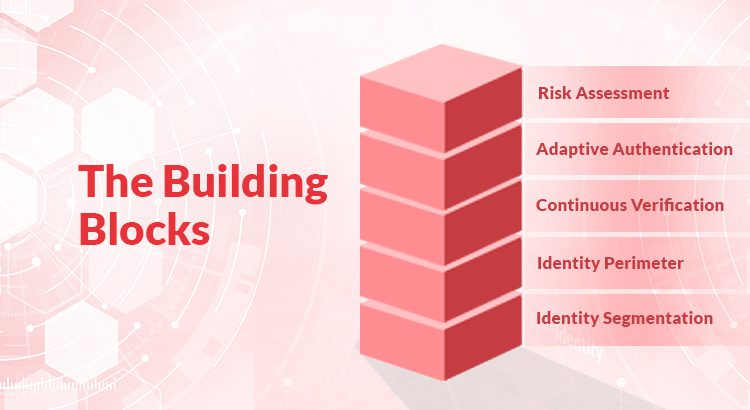
The Zero Trust Approach is based on the principle of “Deny Access” unless the trust is verified at every step. The Zero Trust journey requires careful planning and implementation. Essentially there are five building blocks to construct a Zero Trust architecture. Each building block helps to mitigate the risk of unauthorized access stemming from heterogeneous and distributed IT environments.

 How ARCON helps build the Zero Trust Architecture?

At ARCON, our focus has always been on building Access Management solutions that complement the Zero Trust Approach (ZTA). These solutions are built on the credo – “we trust you, but we will continuously assess the trust”. 

The table below suggests how ARCON IAM stack constructs the Zero Trust architecture. The table below also shows how the risk vector expands in the absence of Zero Trust Approach. 

WITHOUT Zero TrustWITH Zero Trust with ARCON 
Without Zero Trust architecture, organizations remain deprived of micro-segmentation of the large number of identities in the enterprise network. As a result, there are no proper mechanisms to keep track of registered users and there is a risk of iteration of identities (over privileges) across the Line of Businesses (LOBs) and IT functions. With Zero Trust architecture, organizations can build a robust micro-segmentation of identities that minimizes access control vulnerabilities. With micro-segmentation, organizations can:Ensure rule and role-based access to systems by segmenting users based on LOBs and IT functions Automate the segregation of identities based through virtual grouping toolFurther, ARCON’s Zero Trust architected solutions use network overlays, network encryption, software-defined perimeter, and host-based agents to achieve network segmentation and micro-segmentation of identities 
The absence of Zero Trust architecture means there are no micro-perimeters of identities where each end-user is bound by the limitations of access. As a result, there are higher chances of losing track of who is accessing what and for what purpose. It invites insider attacks. With Zero Trust architecture, organizations can build micro-perimeters through policy enforcement and defining entitlements of every identity in order to limit end-user access. ARCON offers:The deepest granular level of control over the identities; helps organizations to ensure every access to the critical system and application is regulated by internal policies Also, ARCON offers a Just-In-Time Privilege approach that removes the risks from the “Always-on” privilege practice and makes sure that there are no standing privileges in the enterprise network.This way, the Least Privilege principle is followed, and there are micro-perimeters around the identities to build the foundation of the Zero-Trust framework.
Without Zero Trust, continuous verification of the “trust” of the identities is not possible. The amount of risk surmounts if the verification of identities remains a one-time procedure. There must be a continuous verification of the identities to stop any chances of anomalies.With Zero Trust, continuous verification of trust is ensured. ARCON helps:The IT administrators review the service access granted to the users regularly to perform various tasks. In case of anomalies, the admins can modify the details of the user access and terminate the session immediately. This way, a holistic user governance framework is built and maintained across the network.
No Zero Trust means no Adaptive Authentication. That means, there are no chances for the IT security teams to detect the geographic location and IP address of the end-user device. Hence, any anomalous activity around the user remains undetected and the risk multiplies.With Zero Trust, organizations can have Adaptive Authentication that helps to assess and re-assess the trust (or authenticity) of the end-users at multiple levels to ensure that the right person is allowed access to the right system for the right purpose at the right time. ARCON offers:An adaptive authentication mechanism that detects and identifies the geographic location and the IP address of the end-user device is considered a criterion to establish the “trust” of the user.
Without Zero Trust, organizations miss out on continuous risk assessment of identities in the IT infrastructure. As a result, the organizations remain unaware of any untoward cyber incident. 
With Zero Trust, organizations can ensure continuous risk assessment of identities. It eliminates the risk of anomalous activities between random verifications. ARCON offersMachine-Learning-based technology Knight Analytics that detects and displays anomalies in the logged data continuously and generates risk scores based on their behaviour and displays the percentage of risk to the administrator.Spection is another dynamic reporting tool that mitigates security risks that come from longer timelines, and complex workflow matrix in the identity access management space.

Conclusion

The user access control framework in an enterprise network is always vulnerable due to “assumed trust.” With Zero Trust architecture, organizations can ensure “verified trust” in every layer of the access management space.

Implementing Multi-factor Authentication (MFA) to Protect Data and Sensitive Information

About authentication and passwords 

Treat your Passwords like your toothbrush. Don’t let anyone else use it and get a new one every six months”.

– Clifford Stoll, American astronomer, and author

Yes, passwords are among the most vulnerable IT assets. Password breach or credentials breach (User identity and password) are among the most common causes of a data breach, application misuse, data exfiltration and corporate espionage. 

And for any modern-day enterprise, passwords are no longer adequate protection against insider or third-party attacks. Relying on passwords to ensure legitimate access to sensitive information might have dire consequences for organizations as intruders have advanced means to compromise accounts. From credential theft to phishing attacks, cybercriminals possess tried-and-tested methods to gain authorized access to critical systems and applications.

Against this backdrop, Multi-factor Authentication (MFA) acts as a secure and strategic entry point to IT systems. The MFA mechanism provides multiple steps for identity verification before end users are allowed access to the desired network, system, or application. 

The significance of MFA explained 

Let us consider a simple daily MFA use case in our lives.

While paying online, any bank first authenticates the card details along with the CVV number, then asks for an OTP, and for further authentication, may ask for the numerical codes mentioned in the grid that appears at the back of debit card. Payments remain successful only if all are validated successfully. Any of the factors, if not authenticated, is considered an unauthorized attempt for payment, and is blocked. If it only had an OTP or a CVV, the chances of misuse would be greatly increased. Multi-factor authentication verifies the account holder’s identity at every step of validation. 

Likewise, implementing MFA for large organizations, government agencies, and small and mid-sized businesses is extremely important. Corporate data, sensitive business information, and citizens’ data can easily fall prey to bad actors if the IT security architecture lacks MFA mechanisms.

Why is MFA extremely important for any modern-day organization?

Traditionally, IT security and risk management pros keep MFA mechanisms in place for administrative access to critical systems such as Active Directory, network devices, and databases. But that is not adequate in today’s context.

While not every access requires privileged-level access, the information stored in an increasing number of SaaS and web applications, DevOps tool chains, and other agile processes among all forms of cloud resources is too important to be compromised. An insider or third-party threat exists for all sorts of accounts, not just administrative and privileged ones.

The sheer volume of data stored and generated daily in all kinds of applications, the data spread across hybrid data centres and multi-cloud environments, and end users accessing data through various access paths, make MFA a genuine requirement. 

How does ARCON enable IT security teams to build impregnable MFA security around data and sensitive information? 

At ARCON we believe that MFA is one of the critical elements in building an overall robust Access Management or Converged Identity framework. That means, whether the accounts are privileged ones or standard ones, on-cloud applications or on-premises applications, MFA provides the necessary safeguards to block threats before they are executed.

Therefore, our solutions not only provide multiple layers of validation but also MFA-native applications that are easy to integrate with third-party authentication tools. In addition, our MFA mechanism ensures a seamless UX.

ARCON provides MFA though the following means: 

One-Time-Password (OTP) on an end user mobile: The dual-factor authentication provides an initial layer of validation. For example, when an end user accesses a critical privileged access environment, an OTP is generated on a mobile phone by a two-factor authentication app that can be ARCON Authenticator, Google Authenticator, Microsoft Authenticator, or any other. 

Device Token: Device or hardware tokens can be used as an additional set of credentials for mission-critical applications. 

Biometrics: While the ARCON Access Management suite comes with built-in dual-factor authentication capabilities, all these solutions seamlessly integrate with disparate third-party biometric authentication tools (fingerprint and voice biometric). 

Single Sign-On (SSO): ARCON SSO provides automated login to multiple applications—SaaS or legacy applications—at one go for a seamless UX. ARCON SSO authenticates end users’ identities with standard identity-based authentication protocols such as OAuth 2.0, OpenID Connect (OIDC), and Security Assertion Markup Language (SAML).

Adaptive Authentication: Adaptive authentication allows administrators to build the level of security based on the relevance of the end-user who is attempting any critical access. ARCON’s Identity Access Management platform offers AI/ML-based adaptive authentication that analyzes the user’s geographic location and the IP address of the device from where he/she is logging in, to assess its authenticity. Any kind of deviation from this baseline standard is notified to the administrator so that immediate action can be taken.

Facial Recognition: In high-risk IT environments, ARCON’s User Behaviour Analytics solution uses sensing technologies to identify end users based on facial characteristics. 

SMS and Email OTP: A One-Time Password (OTP) is a string of alphanumeric characters that ensures user authentication for any login session, especially in critical privileged access environment. SMS and Email OTP ensures that the user is entering the OTP generated either in registered mobile number or email ID (sometimes both) as a proof of authentication.

MFA ensures security by mitigating these threats arising from mere password authentication 

Security against Stolen Passwords: Today, password stealing practice is very common for hackers – anyone can be a victim of such attacks. Not just from an individual perspective, but also from large organizations that save and store huge business information “safely” in vaults. A single password breach can push the victim’s business graph downward for several years. Recently, the risk assessment experts at one of the intelligence service providers found some hackers selling stolen login credentials for a reputed virtual meeting platform on the Dark Web.

MFA makes sure that the authentication of the user is completed at multiple levels, even if there is credential theft. As a result, unauthorized access is prevented, and malicious actors are kept at bay simply because users need to verify their identity in multiple processes.

Mitigate the Risks of Weak Passwords: “12345” or “name” of user – How many times have we used these as conventional and “easy-to-remember” passwords? It has been found that almost 50% of employees (including IT professionals) reuse easy passwords across different workplace accounts for years without changing them.

MFA addresses this password vulnerability because users need to verify their identity in multiple ways. Cybercriminals can hardly gain access to the official network even if they are successful in stealing any critical password. If there is any deviation in the time of access, location of access, or device pattern, then the user is prohibited from allowing access.

No more IT Threats from Unmanaged Devices and Unsecure Network: As organizations are managing IT operations primarily in heterogeneous IT environments today, employees often end up using personal or other available devices for quick access. However, the security of internet connections is seldom thought about. In fact, a compromised router or any public Wi-Fi can provide ample opportunity for a hacker to install malware on the users’ devices. If it goes undetected, the organization might be a victim of compromised passwords and theft of associated business information. 

With MFA, organizations hardly have to worry about secure user access, whether working remotely or on-premises. Multi-layered authentication mechanisms allow employees to perform their tasks without worrying about devices and network connections. Any unauthorized attempt to access a critical system or application is prevented at any of the levels of verification.

Conclusion

MFA helps to build a robust Access Management fabric. Multi-factor authentication (MFA) mechanisms are extremely secure way to protect data and sensitive information from compromised accounts. By implementing MFA, organizations can significantly mitigate insider and third-party threats.