The Cyber security landscape has changed significantly since 2020 due to the pandemic. In the wake of remote access becoming the ‘new normal, organizations encountered several IT administrative, operational and security challenges. Cyber attacks have also increased. As a result, new trends are emerging in cyber security.
Let’s have a look at some of the current trends:
Remote access security topped the list of IT security domains (An Increasing number of inquiries and demos were centered around secure remote access in the last ten months)
Our internal assessment shows that nearly 50% of organizations increased their budget on remote access tools
Endpoint security, Messaging security, Identity management and Access control and Network security are likely to witness a significant increase in IT budget suggests our recent interactions with the IT CXO level
Cyber Insurance is receiving more focus in annual corporate budgets and expected to witness a strong double-digit percentage growth
What are the causes behind these trends?
An unprecedented combination of new challenges, new threats, uncertainty and the level of cyber security preparedness– which was never designed to face current IT use-cases, have necessitated a 360 degree change. Protecting data from theft and cyber attacks has become a daunting task as end users are working remotely, and are dispersed. Authentication mechanisms, Identity governance, end-user behavior patterns are some of the critical areas that have taken the front-seat.
Likewise, the boardroom discussions are more focussed on analyzing the current IT security infrastructure and the desired IT security infrastructure. Most of the global organizations have realized the importance of allocating adequate budget to ensure secure remote IT operations round the year as it seems that the hybrid work culture is here to stay even after the pandemic becomes a history.
In the last 10 months, ARCON has observed that organizations across the spectrum– from BFSI, Telecom, Healthcare, Manufacturing, to Government and defence organizations have started to look into the following areas more closely.
Resultantly,a centralized governance framework, rule-based, role-based, and time-based access control to systems, Multi-factor authentication (MFA), Single-sign-on, end-user behavior monitoring and analytics around it and, access to critical systems through a secure gateway have become IT security ‘must’ for global organizations.
All the above IT practices can ensure uninterrupted and secured IT operations amid both remote and on-prem work conditions. We find that more and more organizations are gearing-up by integrating these tools in their IT infrastructure.
Alongside the intricate world of cybersecurity, the myths and misconceptions regarding the same are growing continually as well. As most people tend to ignore the details, they usually believe in these fallacies and end up prejudicing everything. Thus, in this write-up, we are going to bust a few myths.
Myth: Only the IT team of an organization is responsible for cybersecurity breaches.
Reality: It is, indeed, pretty accurate that the IT professionals of a company generally set up and implement a new cybersecurity infrastructure. However, it is almost impossible for them to stay on guard all the time and protect the network environment. A well-planned cyberattack can occur from almost anywhere at any time (around 1,470 breaches occurred in the year of 2019). So, in reality, almost anyone in the corporation can be responsible for cyber assault. Due to this reason, each and every employee needs to be wary before opening any e-mail from an unknown source. Furthermore, they should avoid clicking on unidentified links as well. Besides, the head of the organization will also need to use a User Behavior Analytics tool in their system. It, in turn, will help him or her to keep an eye on their employees and identify any suspicious behaviour.
Myth: A complete security of a network system is possible.
Reality: The continuous need to become accustomed to the new cyber-threats has always been a never-ending struggle for cybersecurity providers. There is no way you can completely secure your network. It will have at least one loophole, which might lead to cyberattacks. Hence, it becomes imperative to incorporate a strong backup system in the organization. This way, even if you end up losing some of your crucial data, you can always get them back without paying any ransom.
Myth: Using only a single Antivirus tool is adequate to prevent IT security breaches.
Reality: Most people usually think that using a single Antivirus software program is enough. However, due to enforcement of advanced IT technologies, new vulnerabilities are also arising. Hackers are finding new ways to exploit the vulnerabilities. To prevent these anomalies, we need to strengthen the IT security system. For example, identity and access management solution can prevent suspicious behaviour almost instantly. Besides, it helps to establish a proper password management.
Myth: Only some specific industries encounter cyberattacks.
Reality: Even today, some organizations still believe that the hackers will not target them, as they own a mid/ small-sized business. People even tend to point a few specific industries to be less-exposed to the cyber-threat. However, it is needless to say that they are absolutely wrong. According to a report, almost 43% of the cyberattacks are made on smaller businesses. While planning their attack, most cybercriminals tend to ignore the background of a company. They unleash the assault simply driven by the fact of acquiring some money or stealing data. For example, the retail sector is currently at a higher risk of being exposed to cyberattacks. As per reports, almost 59% of data breaches tend to occur in this industry only. Moreover, the healthcare industry has been under the influence of cyber-threat for quite some time. As per reports, around 9.7 million personal records were unearthed in this sector in the month of September 2020. But, it does not mean that the other sectors are safe. The hackers are quite active in the BFSI, hospitality, telecom, and IT industries too.
Myth: The cyber-threats are only carried out through the internet.
Reality: Most cyberattacks are, indeed, carried out through the web. Thus, many organizations think that disconnecting themselves from the internet will be an ideal solution. However, a brand new cyberattack gets unleashed almost every 39 seconds and not all of them are carried out through the internet. Let’s understand it through an example. If an employee brings an infected pen drive and plug it into the office PC, it can affect the whole IT infrastructure and unauthorized access is possible. The organization might lose a substantial amount of sensitive information due to this and might incur financial losses. Endpoint Privilege Management (EPM) can be an effective tool in this scenario.
Conclusion
The cybersecurity universe is ever-changing. Along with the security system, the pattern of cyberattacks are transforming everywhere. So, to prevent these sophisticated attacks efficiently, prediction of IT threats as per IT environment is very important. Believing in myths might hinder in technological progress!
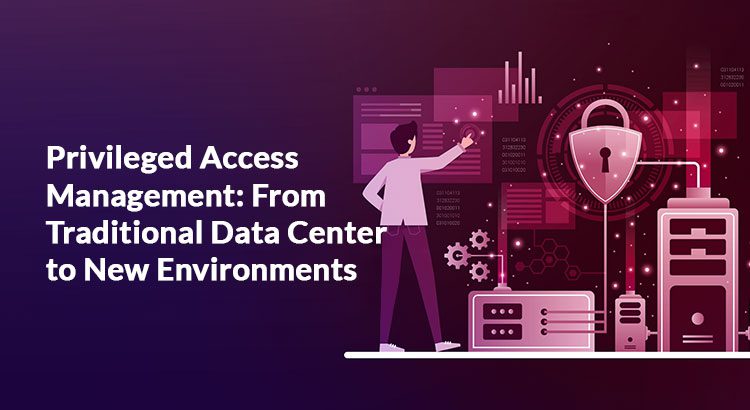
Irrespective of companies’ size and operation, protecting a high-level admin account is an important element of an effective security strategy against cyber-threats. In most data breach cases, the attacker has targeted admin-based credentials to extract data, make changes to configurations, or set-up ransomware. Moreover, PAM is also imperative to ensure that your organization gets maximum protection from insider threats.
If you are not monitoring who is accessing the different accounts, you do not know what is actually happening across the enterprise. Without effective privileged access management, your company is at greater risk of sensitive information being compromised. Additionally, if the passwords are not managed and changed regularly, even workers who have left the company may be able to access vital data.
What exactly is Privileged Access Management, and how it works? Read on to find out more about this vital phenomenon.
What Is Privileged Access Management?
Every company has certain employees accessing important information and applications of the business. The credentials for accessing this application have to be protected strongly. Generally, these applications store sensitive data, and even single unauthorized access can prove costly for the business. The scope of privileged access can be different from one business to another. For instance, in an IT sector, an admin who created, managed, and deleted the accounts of the employees will need privileged access.
So anyone who has access to an application, tool, or software that contains information comes under the category of ‘Privileged User’
Examples of privileged human access include:
Superuser accounts which are accessed by IT system administrators.
The local administrator account is located on the workstation or an endpoint.
The emergency account offers access to a secure system in an emergency situation
Secure socket shell key that offers root access to the vital system.
Examples of non-human privileged access –
SSH Key, which is used by automated processes
Application account specific to an application software
Service account, which service or application leverages to communicate with operating systems.
Once you have determined the privileged access, they must be effectively managed. Generally, the credentials of this access are centralized inside a secure repository known as the ‘Password Vault.’ This mitigates the risk of them being stolen. Additionally, the users sign in their access through the Privileged Access Management system in which the credentials are verified, and the users can then successfully access the application. The whole process is followed each time users or the admin have to log in.
Why should your organization invest in ARCON | PAM on priority?
What Was an Old PAM?
Privileged Accounts Management is an extensive practice encompassing controlling, monitoring, and managing privileged users, shared users, shared groups, services, and service groups that access important systems for administrative tasks.
In a broader sense, the PAM can be understood as Individual Accounts Management. IAM centers on managing accounts that centers on particular users. The function encompasses users as well as group management, the definition of password policies and their implementation, verification, and authorization to access specific resources.
What are the features of old PAM?
Following are the features of old PAM –
Create and rest passwords automatically based on the policies.
Remember, share, and access account passwords, certificates, or keys depending on permissions granted to scripts or users.
Offer access to devices without revealing the passwords by extending interactive sessions to a computer.
Set-up, record, and share sessions via remote console
Identify unmanaged privileged accounts. It can be done either by scanning the network periodically or one time
Save logs of events related to access as well as activities of managed privileged accounts.
How Privileged Access Management Became The New PAM?
PAM has become more than just securing and vaulting credentials. The concept focuses more on securing usage of privileged accounts as well as access to privileged data. With more companies adopting privileged account management solutions, the new PAM has become a vital facilitator of holistic security solutions that paved the way for the growth of PAM. With the course of time, more advanced integration surfaced such as integration with MFA tools, IGA tools, and SIEMs. Additionally, there is also support for DevOps toolchains, API workloads, and RPA tools.
The modern cybersecurity priorities are that there is a need to implement incident response strategies and adhere to the latest compliance requirements. This has encouraged organizations to conduct business and data impact assessments.
Furthermore, when they assessed the results, it showed that there is more need for Privileged Access management. So the modern PAM solutions protect access to critical data and accounts. Compliance security control is implemented to protect as well as mitigate the risks of being exploited. This has made unauthorized access to privileged accounts and data like financial info, identifiable information, etc., more secure.
How Privileged Access Management Benefits Organizations?
There are different areas where new PAM benefits organizations –
Managing The Privileges
For systems to work efficiently, they must be able to access and interact with each other. With companies adopting cloud, robotic process automation, DevOps, etc., the number of applications and machines requiring privileged access has increased. This surge has increased the risk of a cyber attack. The non-human units outnumber the people of the organization and are more challenging to track and manage. Robust privileged access management will monitor all the privileges irrespective of where they are located on the premises. They are capable of detecting anomalous activities in real-time, thereby making the monitoring process more efficient.
Managing Human Privileges
Humans are considered the weakest link of the cyber security series. Whether users abuse their internal privilege access or attackers targeting humans and stealing access from them, humans are always at the risk of exploitation. PAM can assist companies in making sure that the people only have a certain level of access so that they can do their job effectively. It also allows the security team to determine malicious activities by privileged users and take immediate action to eliminate the risks.
PAM Helps With Compliance
The capability of monitoring and detecting suspicious activities in an organization is important; however, without knowing the area that has greater risks, the organization will continue to be vulnerable. Leveraging PAM as a through security as well as risk management strategy allows companies to record and log activities that are related to sensitive information and important infrastructure. This helps the internal team to streamline audit as well as compliance requirements.
Protection Of The Workstations And Endpoints
Every endpoint of an organization, including desktop, laptop, smartphone, tablets, etc., has privilege. Integrated administrator accounts allow the IT team to resolve issues locally, but there is a certain risk associated with it. Attackers can exploit this account and get access to workstations, access credentials, increase the privileges, and move further to their main target. An effective PAM solution is capable of removing local administrative rights comprehensively on workstations, thereby reducing risks to a great extent.
Final Thoughts
Privileged Access Management is the new benchmark that determines the effectiveness of modern cybersecurity. It plays a significant role in reducing the risks of cyber attacks as well as internal abuse. With the evolving cybersecurity realm, the scope of PAM is also constantly evolving. Different deployment models are being extended with more advanced features such as PAM being used as SaaS, managed security solutions, etc. Such developments will give companies the option to choose from various PAM solutions that best cater to their objectives.
The total retail business of the e-commerce industry has been rising steadily during post-pandemic months. Both B2B and B2C segments of the e-commerce industries have observed almost double growth after WFH (Work from Home) became effective worldwide. Simultaneously, this has opened multiple doors of cyber risks. A recently India-based leading online food and grocery store suffered a massive data breach of more than 1 million of private customer details in an unfortunate incident. This has forced the victim to seek assistance from the cybercrime department to minimize the loss as much as possible. This incident prompted the other brands to boost their IT security policies and mechanisms to a satisfactory level.
Why is the risk increasing?
Cyber predators are sniffing treasures from the ecommerce industry during this new normal. While the entire globe is preferring to stay indoors and involved in virtual celebration, almost every individual is depending on online gifting for their nearer and dearer ones. To cash on this rare opportunity, the popular brands are adding extra inventories on their virtual shop to invite more footfalls. However, this boom has led cyber crooks to capitalize online IT security vulnerabilities There is a huge treasure trove hidden behind millions of user data, their personal details, financial details, payment transaction records etc. that are accumulated day in and out.
Identification and elimination of Insider risks
No organization would like to see their name in the cyber news headline due to wrong reasons. Most of the vulnerable areas of an e-commerce organization lie with the payment gateway systems and database management.
E-Retailers of course maintain a robust IT security. They have firewalls, IDS, Advanced Threat Detection and Response tools to keep malicious network traffic at bay.
Also, a mechanism to control Grant and Revoke access to elevated privileges (example MySQL Database) offers a policy-based access control.
However, it is definitely a herculean task to micromanage the user activities of the payment tracking team, database management team, promotional requirements/ marketing team every hour. And a lackadaisical IT security approach can surely result in data breach as unmonitored endpoints and end users pose significant IT threats.
Today identification of cyber threats has transformed into predictive approach rather than preventive measures. It requires monitoring of users’ behaviour patterns and reporting of the tasks performed. Today’s E-retailers require robust solutions such as ARCON Privileged Access Management and ARCON User Behavior Analytics
Vulnerabilities of Financial Records:
The entire e-retail industry is standing on EPS (E-commerce Payment Systems) to ensure smooth business operations. It authorizes the transfer of funds between buyers and sellers and allows the e-commerce portal to place a request for money from a customer’s bank against the products they have purchased. After a successful transaction, the merchant needs to keep a record of it because in case of refunds, the seller needs to return the amount to the same buyer. These transaction records are stored in highly critical systems which are accessed by users with elevated rights.
To ensure a secured and successful EPS system, end users with privileged rights require continuous monitoring to keep a track of who is accessing which account for what purpose and when. Ideally, malicious insiders are the biggest threat to organizations where access to critical systems is not happening on a “need-to-know” and “need-to-do” basis. Occasionally, (especially during festive hours) extra workforce is brought into action to manage over-burdened regular tasks and many are granted elevated rights temporarily. However, risk aggravates if the rights are not revoked even after the tasks are completed.
ARCON | PAM overcomes these challenges by allowing access only on a “need-to-know” and “need-to-do” basis. With the permission of the IT administrator, the user is granted access on a granular control basis including the now widely adopted method, “Just-in-time Privilege” to restrict the duration of the activities. Moreover, the solution improves the overall access control mechanism through session monitoring and reporting.
ARCON | PAM solution helps e-retailers to continuously monitor all user activities including privileged tasks. A live dashboard displaying all user activities enables the admins to keep an eye on privileged sessions and identify malicious activities instantly.
Data Privacy
It is said that data security is the biggest hurdle in the growth of e-commerce. Why? In spite of having sophisticated network security solutions, organizations often fail to ensure legitimate traffic on the Web servers. As a result, they face multiple security threats. Programs that run on a server possess higher potential to malign databases, terminate server software or make unexpected changes in the information if those are malicious in nature. But equally threatening is anomalous end user behavior activities. Identification of risky behaviour profiles and detection of anomalous IT profiles is highly crucial to ensure data security. A stringent and relevant IT security policy can make sure that organization’s IT operations are safe and as per expectation. Poor or lackadaisical policies as to end points and end-users can never ensure a safe IT environment even if there are the best security technologies.
ARCON | UBA enables IT administrators to configure baseline activities on machines as per the centralized policy and identifies users who are deviating from the baseline policies. The advanced and unified enterprise data analytics identifies user-activities based on daily use cases and allows access only if the user has authorization or privileged entitlements.
Security of Critical Credentials:
From an individual user’s perspective, a strong password secures him/ her from breach of his/ her digital privacy. Furthermore, to strengthen the security, we keep on changing the passwords on regular intervals. Similarly, an e-retailer, at an enterprise scale, needs to secure the sensitive login credentials of all the elevated admin accounts (privileged accounts). Malicious actors might be in disguise among hundreds of insiders, third-party vendors or even business partners (in case of joint ventures) who are frequently logging into those systems for various tasks or purposes. The number of privileged accounts are piling on day by day with the expansion of IT infrastructure. Keeping the business model of the e-commerce industry in mind, even just adding a serviceable city in the list, widens the security gap if adequate measures are not taken by the organization.
ARCON | PAM with the help of a robust Password Vault engine helps organizations to frequently randomize and change passwords credentials automatically. It is hundred times more advantageous over manual control of critical passwords and holds the key to prevent any malefactor in the network periphery.
Conclusion
Every organization, especially in the ecommerce industry, is prioritizing privacy control and IT security infrastructure to ensure best secured services to the customers. Some stray IT and insider incidents put a big question mark on data privacy. The most advanced and best-in-class solutions like ARCON | User Behaviour Analytics (UBA) and ARCON | Privileged Access Management (PAM) can ensure data security and data integrity of E-Retailers.
Cybersecurity issues are emerging to be fiercer day by day. In fact, the average cost of a data breach in 2019 stood at $3.92 million. Many companies across the world experience detrimental consequences due to these breaches where they end up losing their client base, market reputation, and financial stability. Considering that more than 83% of the global workplace is expected to move to the cloud by the end of 2020, cybersecurity has become more important than ever.
However, even with security breaches skyrocketing globally, a plethora of companies still do not have sufficient budget to cater to information security. Moreover, the lack of unawareness among companies is also astonishing. In the article, we are sharing information associated with cybersecurity to generate more awareness around this subject.
Top Cybersecurity Issues to be Aware of
Following are the cybersecurity issues that companies are facing:
Misuse of Resources Internally
Even the strongest cybersecurity measures can be ineffective when employees misuse their privileges. According to reports, around 85% of employees have taken information or documents that they have created, and around 30% have accessed data they haven’t created. The data include customer data, strategy documents, proprietary source code, etc. And a majority of the employees took data because there are no technologies or policies restricting exploitation.
Phishing Scams
These are the digital version of the conventional phishing attacks that include email messages that leverage different forms of deception and manipulation. The main objective is to convince the users to click on the link mentioned in the email and share their personal information. Modern phishing scams have become extremely sophisticated and look like the email is from a trusted company.
Malware
Malicious software is quite a standard form of a cyberattack that can be introduced into a system via different methods. Some of the popular sources of malware include software downloads, email attachments, and operating systems. The malware attaches itself to legitimate code and spreads across the systems. Its main goal is to grant unauthorized access to the system or computer.
DDoS Attacks
DDoS (Distributed Denial of Service) attacks have emerged as one of the common forms of cybercrime in recent years. The main objective of a DDoS attack is to put the server under excessive strain with tons of access requests until it crashes.
These are often facilitated by the botnets, defined as a fleet of computers instilled by malicious software and administered by a hacker. These days more advanced forms of DDoS attacks include a process called menacing, which harnesses open source object-catching systems in order to boost the access requests and overload the sites with over a terabyte of traffic.
Why should your organization invest in ARCON | PAM on priority?
How can Insufficient IT Budget Hinder Efficiency?
IT security budgets are unable to keep up with the exponential growing security threats. The unavailability of required resources is proving to be one of the main challenges. According to a survey by the Chartered Institute of Information Security, more than 45% of the respondents agreed that the industry is struggling with a lack of resources.
The security professionals revealed that their existing budget does not allow them to keep up with the sophisticated cyber-attacks. 52% of the respondents feel that the companies are not aligning their security budget with the growing complexities of the IT threats. A limited budget can impact the mindset of the security team. The primary challenge for them is understanding where to allocate limited resources in different areas. Additionally, the lack of budget means that the team is not able to access vital tools that they need.
A restricted budget can impact the efficiency of the entire security team as they will be struggling to meet the objectives with inadequate resources.
How to Prioritize Cybersecurity in a Limited IT Budget?
The cybersecurity landscape is constantly evolving; therefore, it is imperative to stay updated with the growing trends. However, it is not always possible for companies to cater to the growing requirements of IT security. In such situations, there are certain ways that can be prioritized in a restricted IT budget:
Set Up an Incident Response Plan
Determine security vulnerabilities and set up policies that address the same. Considering that you have already identified the criticality of various incidents, you can figure out what actions are needed to be taken to address them and act promptly to mitigate the damages. Having a process outlined early on for monitoring as well as tracking activity post an attack can further enhance the remediation as well as forensic efforts. An incident response plan is similar to a fire drill in the cybersecurity realm. Ensure that you test this plan once in a while to ensure that the team is updated about the process.
Keep your Files Backed Up
When it comes to cybersecurity, you cannot overlook the importance of backup. Ensure that all your important system files are backed up to a computer that is not connected to a network. This can help in reducing the ability of malware to spread and target your configuration files. According to a report, constantly backing up your important system files can mitigate the average costs of a cyber-attack by approximately $2 million.
Keep your Security Updated
Make sure that you continue to update your software and systems with evolving technology. Cyber Attackers feed on outdated systems as they are easy to access into the network. Therefore it is vital to maintain the latest infrastructure security by:
Constantly updating any unpatched and outdated software
Staying updated on signatures and anti-virus rules
Implementing effective strategies in order to secure the network.
Training your Employees
You will be able to control cyber-attacks to a significant extent if the employees are well-educated and trained with cybersecurity measures. Similar to first responders, your employees should be trained and empowered regularly to deal with various cyber threats. Conduct regular training sessions to educate employees regarding different ways to mitigate exposure to cyber threats. Some of the steps that employees can take include:
Consider every email malicious until verified.
Create complex and strong passwords.
Being mindful of exposing too much data on social media.
Accessing files and networks only from secure devices.
Constantly updating systems and software.
Submitting a USB or thumb drive to the IT team.
Implement Two-Factor Authentication
You can protect your data by adding an additional layer of security that goes beyond including passwords. In two-factor verification, generally, users are required to enter a password, and then they will receive a code via a text or email that they need to enter before accessing the account. Two-factor verification may include code, face scan, fingerprint scan, etc. This form of security measure is available on platforms such as Apple, Google, Twitter, and Microsoft.
Final Thoughts
With the world trending towards a digital revolution, the importance of cybersecurity is increasing manifolds. However, companies worldwide are yet to realize the importance of cybersecurity, even with growing cases of attacks. Companies need to take proactive steps to protect themselves from sophisticated cyber attackers. If they fail to take timely measures, then the consequences can be detrimental. Along with losing money, they can end up losing their market reputation, customer confidence, and overall reliability.